Rank Higher Grow Faster
On-Page SEO Strategies That Actually Move the Needle in 2026
Rankings still start on the page. Links and domain authority matter, but if your titles are vague, your content is thin, or your structure is a mess, you’re leaving visibility on the table. On-page SEO is the layer you control directly: what you say, how you say it, and how clearly both users and crawlers can understand it. This guide focuses on the on-page strategies that still move rankings in 2026—without fluff or filler.
What on-page SEO is (and why it still matters)
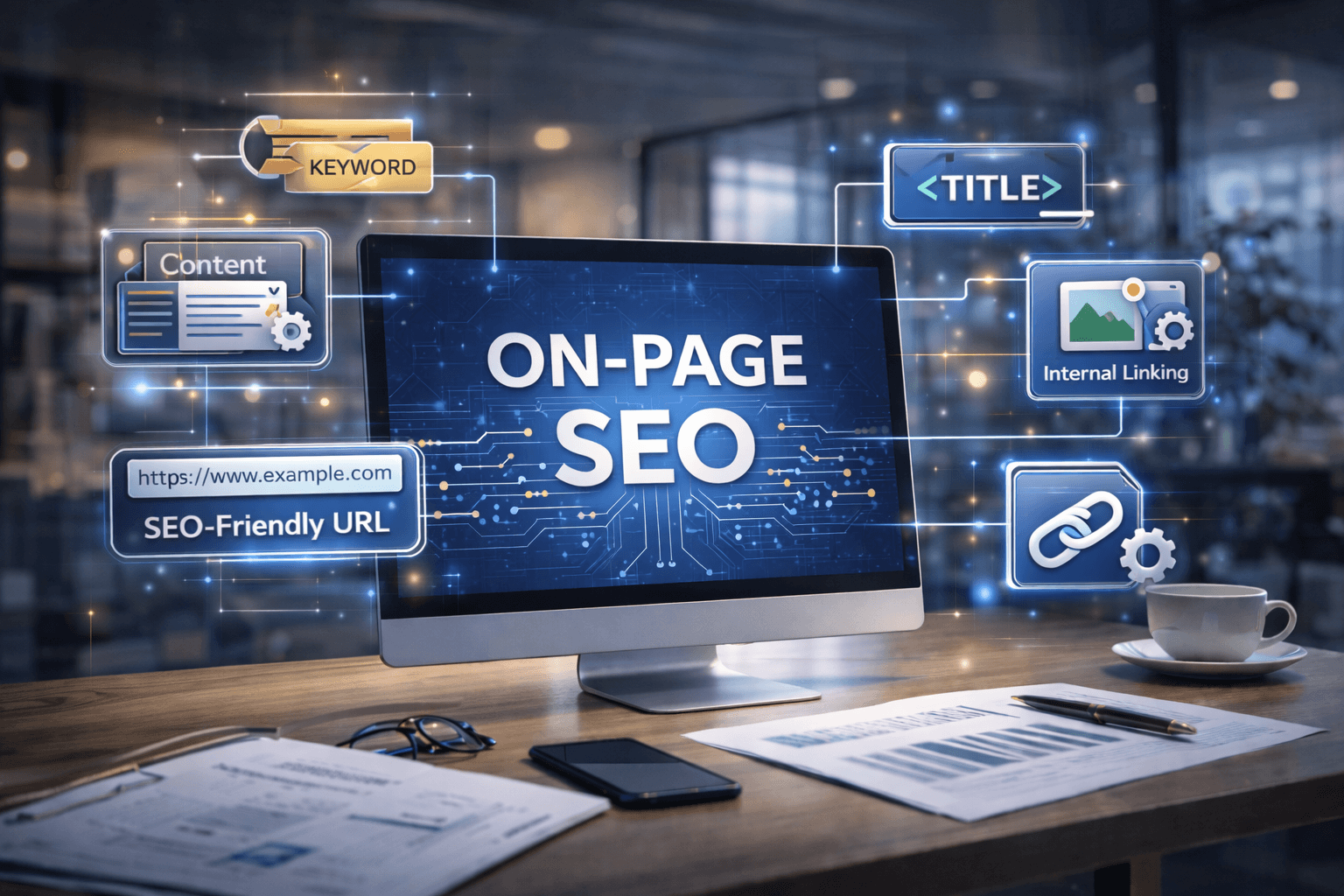
On-page SEO is everything you can change on the page itself: titles, meta descriptions, headings, body copy, internal links, URLs, and technical basics like speed and mobile layout. Google’s guidance hasn’t shifted away from that. They still treat the words in your title tag as a core relevance signal. They still expect clear structure, readable content, and a page that loads and behaves well. The goal isn’t to “game” a formula. It’s to make each page obviously relevant and useful for a specific query—in a way both people and algorithms can parse.
Title tags and meta descriptions
Your title tag is the main label of the page. Keep it under about 60 characters so it doesn’t get cut off in results. Put the main topic or keyword near the front. Avoid duplicate titles across the site; each important page should have a distinct, descriptive title. Meta descriptions don’t directly affect rankings, but they affect clicks. Write 150–160 characters that state what the page offers and why someone should open it. Skip hype and keyword stuffing. Clear and specific beats clever.

“In 2026, if you’re not findable in search, you’re not in the game.”

On-page SEO checklist (2026)

Headings and content structure
Use one H1 per page that states the primary topic. Subheadings (H2, H3) should break the content into logical sections and reflect what each part covers. That helps readers scan and helps search systems infer structure and meaning. Headings don’t need to repeat the exact query word-for-word, but they should align with intent. Short paragraphs and scannable blocks make the page easier to read and easier for systems to summarize—including in AI overviews and snippets.
Content quality and search intent
Thin or generic content rarely holds rankings. Pages that rank tend to match what people are actually trying to do: learn something, compare options, or take an action. Before you write, clarify the intent behind the target query. Then cover the topic fully: definitions, steps, examples, and common follow-up questions. Depth doesn’t mean length for its own sake. It means answering the query and related questions in a way that feels complete and credible. That supports both relevance and E-E-A-T.
Internal linking and URL design
Internal links spread authority and clarify site structure. Link from high-authority or broad pages to important but underlinked ones. Use anchor text that describes the target page. Avoid “click here” or vague phrases. URLs should be short, readable, and stable. Include a clear keyword or topic when it fits naturally. Avoid long parameter strings or random IDs when you can. Clean URLs are easier to share, remember, and trust.
Page speed and user experience
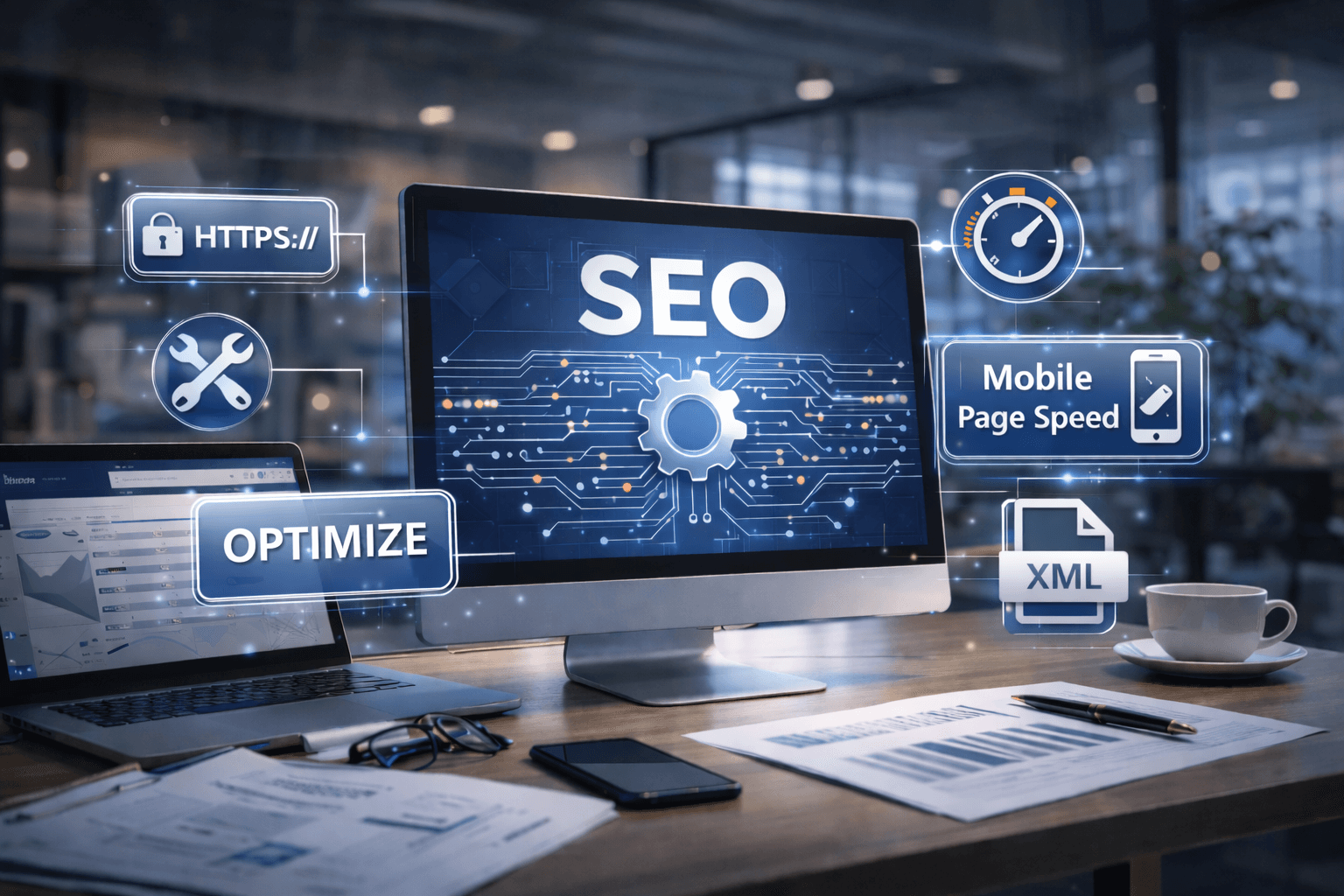
Slow or janky pages hurt engagement and, indirectly, rankings. Core Web Vitals (LCP, INP, CLS) reflect loading, interactivity, and layout stability. Aim for a fast LCP (e.g. under 2.5 seconds), responsive INP (under 200 ms), and low CLS (under 0.1). Optimize images, trim heavy scripts, and fix layout shifts. Mobile experience is part of the same picture: if most of your traffic is on phones, prioritize mobile speed and usability.
E-E-A-T and trust signals
Experience, expertise, authoritativeness, and trustworthiness show up in your content and site design. Use clear bylines and author context where it matters. Cite sources and data. Keep contact, about, and policy pages accurate and easy to find. HTTPS, consistent NAP (for local), and a professional, transparent presentation all support trust. For sensitive topics (health, money, legal), E-E-A-T matters even more—so depth and sourcing are non-negotiable.

On-page SEO in 2026: clarity for humans and AI

Search is changing: more answers in SERPs, more AI overviews and assistants. That doesn’t replace traditional on-page SEO; it reinforces it. Systems that summarize or cite your page need to understand it quickly. Clear titles, headings, and direct answers (e.g. right after an H2) make that easier. So does consistent structure and internal linking. Optimize for clarity and intent first; that tends to work for both classic search and newer interfaces.
What to do next
Audit a sample of key pages. Check title and meta uniqueness and accuracy. Review H1 and heading hierarchy. See if content truly matches search intent and covers the topic. Map internal links and fix broken or weak ones. Run a technical and speed check (Core Web Vitals, mobile). Then fix the biggest gaps first—often titles, main headings, and a few high-traffic pages. Iterate from there. On-page SEO isn’t a one-time project. As you add pages and update content, keep titles, structure, and quality in mind. Small, consistent improvements compound. The pages that rank in 2026 will still be the ones that are clearly relevant, well-structured, and genuinely useful—so that’s where to focus.

FAQ

What is the most important on-page SEO factor in 2026?

The most important on-page factor is relevance and clarity: your title tag, H1, and content should clearly match what the searcher is looking for. Google still treats the words in your title tag as a core relevance signal. After that, focus on content that matches search intent, a logical heading structure, and a page that loads quickly (Core Web Vitals). No single element wins alone; alignment between query, title, and content matters most.

How long should a title tag be for SEO?

Keep title tags under about 60 characters so they don’t get cut off in search results. Put the main topic or target keyword near the front. Every important page should have a unique title that accurately describes the page. Avoid duplicate or vague titles across the site.

Do meta descriptions affect rankings?

Meta descriptions are not a direct ranking factor, but they strongly affect click-through rate from search results. Write 150–160 characters that clearly say what the page offers and why someone should click. A clear, specific description usually outperforms generic or keyword-stuffed copy and can improve traffic even when rankings stay the same.

Why do headings matter for on-page SEO?

Headings help search engines and users understand structure and topic. Use one H1 per page for the main topic, and H2/H3 for sections. That makes the page easier to crawl and more likely to be used for snippets and AI overviews. Headings should align with search intent and describe what each section covers, without awkwardly repeating the same keyword.

Is on-page SEO still important with AI search?

Yes. On-page SEO is still important with AI search. Systems that summarize or cite your page need clear titles, headings, and a direct answer (e.g. right after a subheading). Well-structured, intent-focused content is easier for both humans and AI to use. Optimizing for clarity and relevance works for traditional search and for AI-driven answers.
Our Services
Contact Us
About Us
Unlock the full potential of your online presence with Seoly, where innovation meets optimization. In today’s digital landscape, visibility is paramount, and our tailored SEO solutions are crafted to ensure your brand shines brightly amidst the competition.