Rank Higher Grow Faster
Local SEO Tactics Every Small Business Must Know in 2026
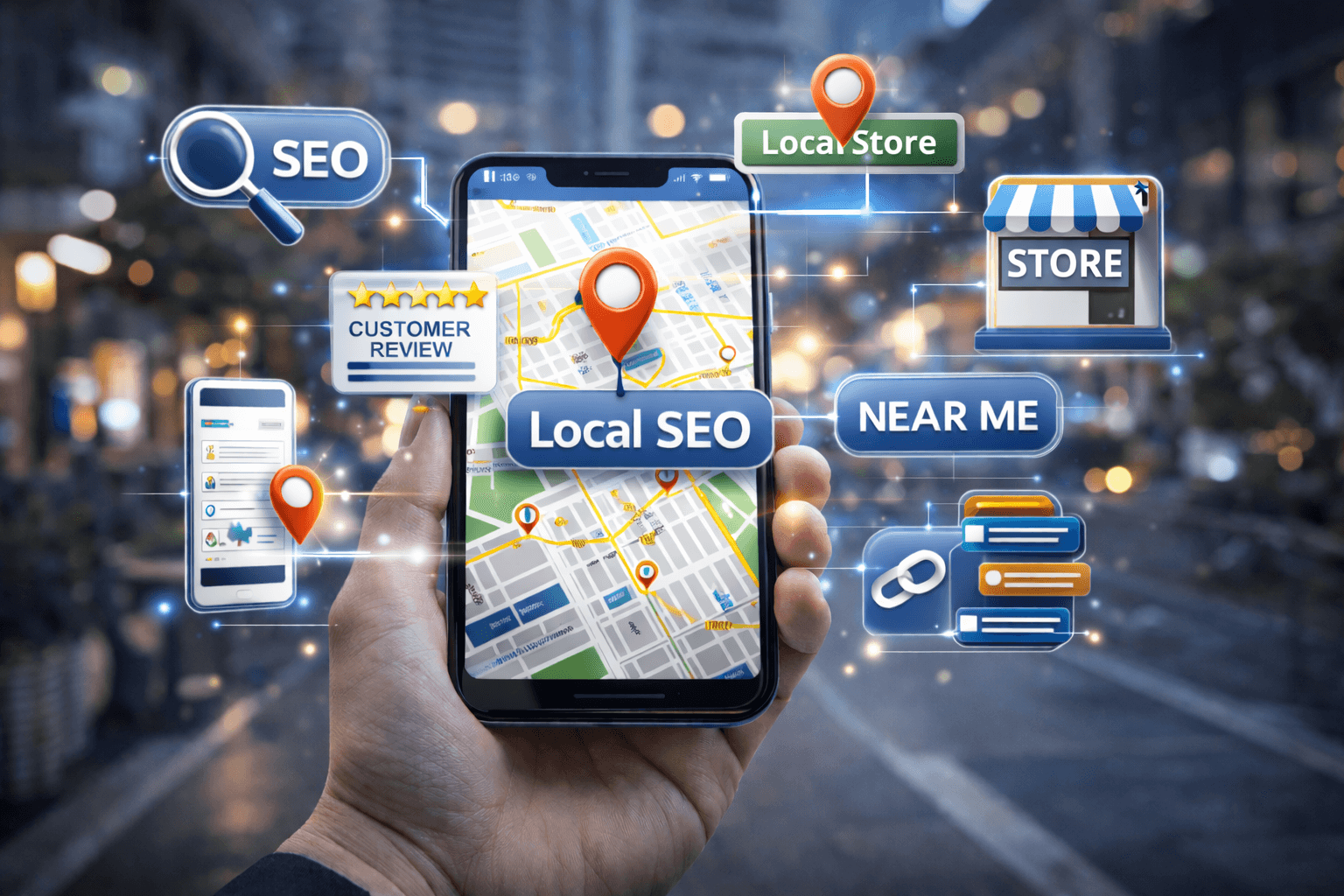
For most small businesses, local search is where customers are: “plumber near me,” “best café [neighborhood],” “open now.” That traffic runs through Google Maps and the local pack, and at the center of that is your Google Business Profile. A complete, accurate, and active profile plus a consistent website and a solid reputation still form the core of local SEO. This guide covers the local tactics that matter most in 2026—no fluff, just what small businesses can do themselves.
Google Business Profile: your local home base
Your Google Business Profile is what shows up in Maps and in the local results on Search. If it’s wrong, incomplete, or dormant, you’re invisible to a huge chunk of local demand. So the first step is to claim and verify your profile, then treat it like a core business asset. Everything below builds on that.
Getting the basics right
Use your real business name—no extra keywords or city names. Pick the primary (and secondary) categories that best match what you do. Write a short description that says what you do and where you serve, in plain language. Keep your address and phone number accurate and consistent with what’s on your website and elsewhere. Service-area businesses can set service areas instead of a single address. Hours matter: wrong hours frustrate customers and can hurt trust. Double-check everything. Small errors here undercut the rest of your efforts.
Reviews: growth, response, and recency
Reviews influence both reputation and local ranking. Google looks at how many you have, how recent they are, and how you respond. So aim for steady review growth—month over month—rather than one big push. Ask happy customers at the right moment; make it easy (e.g. short link). Never buy or incentivize reviews; Google’s spam updates have tightened enforcement on fake or manipulated reviews. Reply to every review, good or bad, with a specific, human response. Thank people, address concerns, and avoid copy-paste replies. Recency and velocity matter as much as total count in current local algorithms.

“In 2026, being invisible in search means being invisible to buyers.”

Local SEO checklist (2026)

Photos and posts
Photos make your profile stand out and signal that the business is real and active. Upload real photos: exterior, interior, team, work, products. Do it regularly—e.g. weekly or every two weeks. Avoid stock images. Posts (updates, offers, events) keep the profile fresh and give people a reason to click. One or two posts per week with a clear message and a simple call-to-action are enough for most businesses. Consistency beats occasional bursts.
Your website’s role in local SEO
Google connects your profile to your website. If the site is weak, vague, or inconsistent with your profile, local performance can suffer. So keep NAP (name, address, phone) identical on the site and on the profile. Have a clear “About” or “Service area” that matches your GBP. If you serve multiple areas, consider location pages that are substantive—not thin doorway pages. Mobile experience and speed matter; many local searches happen on phones. Basic technical SEO (indexing, clear structure) applies to local too.
What’s changed in 2025–2026
Local ranking has shifted toward engagement and behavior. Clicks to the website, direction requests, calls, and photo views all send signals. A newer business with strong engagement can sometimes outrank an older one with less interaction. AI is also in the mix: Google can generate Q&A from your info and reviews, and GBP data feeds into AI overviews. So a complete, accurate profile and active use (posts, photos, replies) matter more than ever. Spam tactics—keyword-stuffed names, fake reviews—are riskier; Google’s updates have targeted those.

FAQ

What is the most important local SEO factor?

For most businesses, a complete, accurate, and active Google Business Profile is the most important factor. After that: consistent NAP everywhere, genuine reviews with steady growth and recency, and a website that matches and supports the profile.

How do I get more Google reviews?

Ask satisfied customers at the right moment and make it easy (e.g. short link). Never buy or incentivize reviews. Reply to every review with a specific, helpful response. Steady growth and recency matter as much as total count.

Do I need a website for local SEO?

Yes. Google ties your profile to your website. A weak or inconsistent site can limit local performance. You need at least accurate NAP, clear service/area info, and mobile-friendly pages. Location or service pages can help if you serve multiple areas.

How often should I post on Google Business Profile?

One or two posts per week, with a clear message and a call-to-action, is enough for most small businesses. Consistency matters more than volume. Use posts for updates, offers, events, and seasonal content.

Will keyword stuffing my business name help?

No. Google’s guidelines say to use your real business name only. Adding keywords or location to the name can trigger policy violations and hurt trust. Use categories and the description to signal what you do and where you serve. For small businesses, local search is often the main channel. Get the profile right, keep it active, and keep the website and citations consistent. That’s the foundation everything else builds on.
Our Services
Contact Us
About Us

Strategic Dominance

Founded in 2011, Rocket Driver builds search programs designed to win in competitive markets through disciplined execution across technical SEO, intent alignment, and authority.


Operational Precision

We run SEO as a measurable system with clear priorities, accountable delivery, and reporting tied to business outcomes, turning search visibility into a strategic asset.