Rank Higher Grow Faster
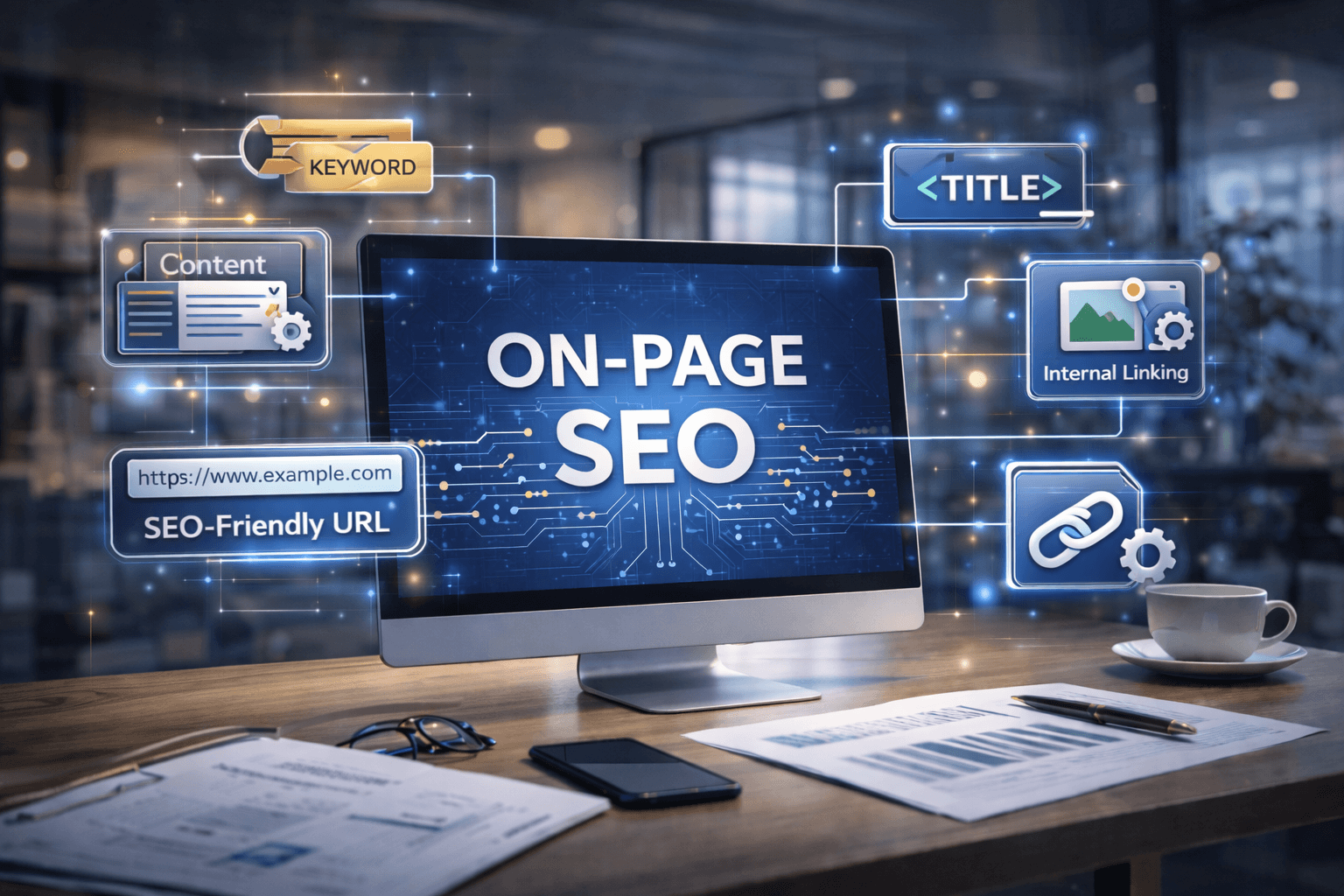
How to Improve On-Page SEO for Better Visibility in 2026
Visibility in search starts with the page. If your titles are wrong, your content is thin, or your structure is unclear, you won’t get the clicks or the rankings you want. Improving on-page SEO is mostly a matter of fixing the right things in the right order. This guide is a practical path: what to audit, what to fix first, and how to make changes that actually improve visibility.
Step 1: Audit what you have
Before changing anything, see what you’re working with. List your main pages—the ones that should drive traffic or conversions. For each, check: What’s the title tag? The meta description? Is there one clear H1? Do headings form a logical outline? Is the content long enough and specific enough to match the topic? Are there internal links in and out? Use a crawler or an SEO extension to pull titles and metas in bulk. Use Search Console to see which pages get impressions but few clicks—those are visibility opportunities. Note duplicates, missing metas, and pages that don’t match any clear intent.
Step 2: Fix titles and meta descriptions first
Titles and metas are quick wins. Each important page should have a unique title (under ~60 characters) that states the topic and, where it fits, the main keyword. Meta descriptions don’t affect ranking directly but affect click-through. Write 150–160 characters that explain what the page offers and why someone should open it. Fix the pages with the most traffic or the biggest visibility gap first. Avoid duplicate or empty titles and metas across the site.
Step 3: Tighten headings and structure
One H1 per page that matches the main topic. H2s for major sections, H3s for subsections. Headings should describe what’s in the section—so readers and crawlers can follow the logic. If a page has no H1 or a string of H2s with no hierarchy, fix it. Add a short intro before the first H2 so the page doesn’t start with a heading. Structure supports both readability and snippet eligibility; clear sections are easier to surface in “People also ask” and similar features.

“SEO isn’t optional anymore. It’s how customers find you.”

On-page improvement checklist (2026)

Step 4: Align content with intent
If a page gets impressions but few clicks, or ranks for the wrong queries, the content may not match intent. Identify the primary intent (informational, commercial, transactional) and the main query. Then adjust the content: add or expand sections that directly address that query and common follow-up questions. Remove or shorten tangents. The goal is that someone who lands on the page immediately sees that they’re in the right place. That alignment improves relevance and can improve click-through and time on page.
Step 5: Add and fix internal links
Internal links spread relevance and help crawlers find important pages. Link from high-authority or high-traffic pages to ones you want to grow. Use descriptive anchor text. Fix or redirect broken internal links. Find orphaned or underlinked pages and add a few targeted links from related content. Don’t overdo it—a handful of relevant links per page is enough. Quality and relevance matter more than count.
Step 6: Improve readability and scannability
Dense walls of text get skipped. Short paragraphs, bullet lists for options or steps, and clear subheadings make pages easier to read and easier to summarize. Break long sections into smaller ones. Put the main answer or takeaway near the top of a section when it fits. These changes help both humans and systems that pull excerpts for snippets and AI overviews.
Step 7: Strengthen trust and E-E-A-T
Trust signals matter for visibility, especially for competitive or YMYL topics. Add or update author bylines and short bios where it makes sense. Cite sources for claims and data. Make sure contact, about, and policy pages exist and are accurate. HTTPS, consistent business info (for local), and a professional design all support E-E-A-T. Small, credible touches add up.

FAQ

What is the first thing to fix for on-page SEO?

Usually title tags and meta descriptions, then H1 and heading structure, then content intent and internal links. Fix the pages with the most traffic or the biggest gap between impressions and clicks first.

How long does it take to see on-page SEO results?

Crawlers can pick up title and meta changes within days or weeks. Ranking and traffic shifts often take several weeks to a few months, depending on competition and how big the changes are. Track impressions and clicks in Search Console to spot improvements.

Should every page have a unique meta description?

Yes. Important pages should have unique meta descriptions that describe the page and encourage clicks. Duplicate or missing metas waste a chance to improve click-through. Use 150–160 characters and avoid keyword stuffing.

Do headings affect rankings?

Headings help search engines understand structure and topic. They support relevance and snippet eligibility. Use one H1 per page and a logical H2/H3 hierarchy that matches the content and intent. They’re not the only factor, but they’re part of a well-optimized page.

How do I know if my on-page SEO is working?

Use Search Console: watch impressions, clicks, average position, and click-through rate for key pages. Compare before and after you make changes. Improving CTR and rankings for target queries is a sign on-page improvements are working. Improving on-page SEO isn’t about one magic fix. It’s about systematically fixing titles, structure, content, and links so that each page is clearly relevant and easy to use. Do that, and visibility follows.
Our Services
Contact Us
About Us

Strategic Dominance

Founded in 2011, Rocket Driver builds search programs designed to win in competitive markets through disciplined execution across technical SEO, intent alignment, and authority.


Operational Precision

We run SEO as a measurable system with clear priorities, accountable delivery, and reporting tied to business outcomes, turning search visibility into a strategic asset.