“In 2026, if you’re not findable in search, you’re not in the game.”
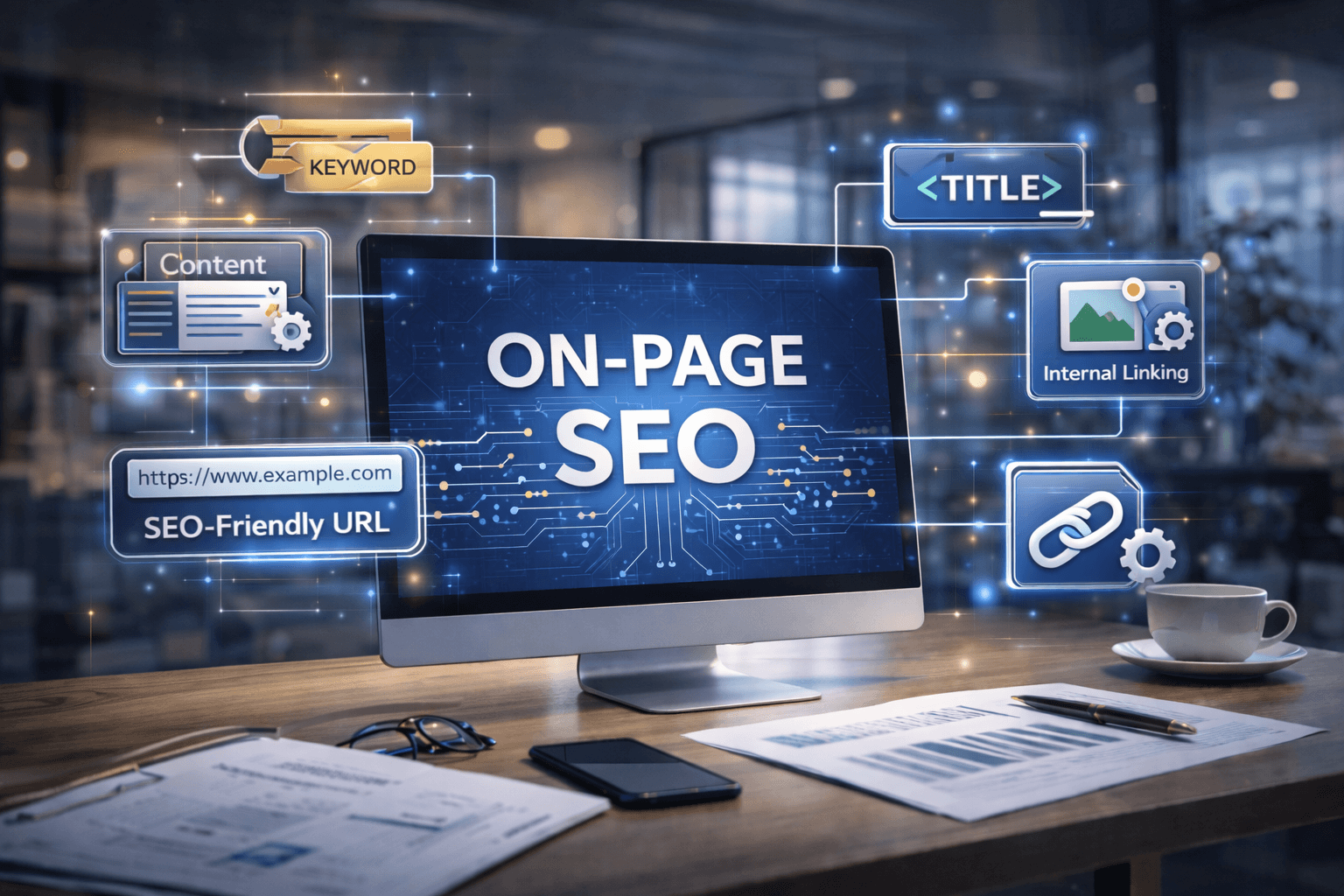
On-page SEO checklist (2026)
- One unique title tag per page
- Keep titles under sixty characters
- Put primary keyword near the front
- Write clear, unique meta descriptions
- Use one H1 per page only
- Structure sections with H2s and H3s
- Match content to search intent
- Use descriptive internal link anchor text
- Prefer short, readable URLs
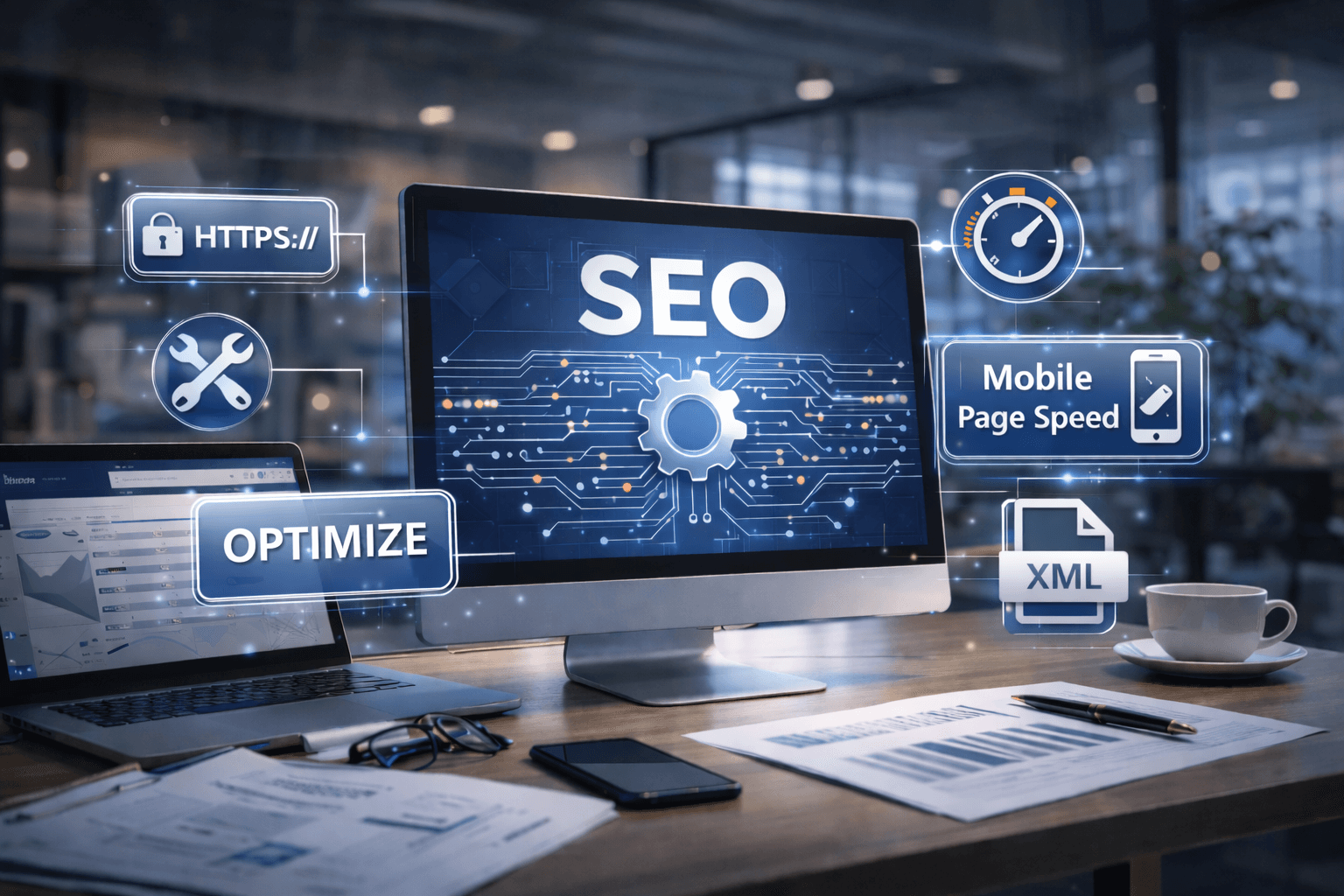
- Optimize for Core Web Vitals
- Show expertise and cite sources
- Lead key sections with direct answers
On-page SEO in 2026: clarity for humans and AI
FAQ
What is the most important on-page SEO factor in 2026?
The most important on-page factor is relevance and clarity: your title tag, H1, and content should clearly match what the searcher is looking for. Google still treats the words in your title tag as a core relevance signal. After that, focus on content that matches search intent, a logical heading structure, and a page that loads quickly (Core Web Vitals). No single element wins alone; alignment between query, title, and content matters most.
How long should a title tag be for SEO?
Keep title tags under about 60 characters so they don’t get cut off in search results. Put the main topic or target keyword near the front. Every important page should have a unique title that accurately describes the page. Avoid duplicate or vague titles across the site.
Do meta descriptions affect rankings?
Meta descriptions are not a direct ranking factor, but they strongly affect click-through rate from search results. Write 150–160 characters that clearly say what the page offers and why someone should click. A clear, specific description usually outperforms generic or keyword-stuffed copy and can improve traffic even when rankings stay the same.
Why do headings matter for on-page SEO?
Headings help search engines and users understand structure and topic. Use one H1 per page for the main topic, and H2/H3 for sections. That makes the page easier to crawl and more likely to be used for snippets and AI overviews. Headings should align with search intent and describe what each section covers, without awkwardly repeating the same keyword.
Is on-page SEO still important with AI search?
Yes. On-page SEO is still important with AI search. Systems that summarize or cite your page need clear titles, headings, and a direct answer (e.g. right after a subheading). Well-structured, intent-focused content is easier for both humans and AI to use. Optimizing for clarity and relevance works for traditional search and for AI-driven answers.